Surfing with Laborplastik

A surfboard made from recycled laboratory plastic? Really? There’s no such thing as can’t! “Three years ago now,” says Katja Strunck, Head of Facility Management at Labor Berlin, “we received an inquiry from Merijaan.” This Berlin start-up produces new products from used plastic. “They quite rightly assumed that we must produce an incredible amount of plastic waste,” continues Katja Strunck, “And yes—we generate so much plastic waste annually that it made perfect sense to explore innovative recycling solutions. So Merijaan’s request arrived at just the right time.”
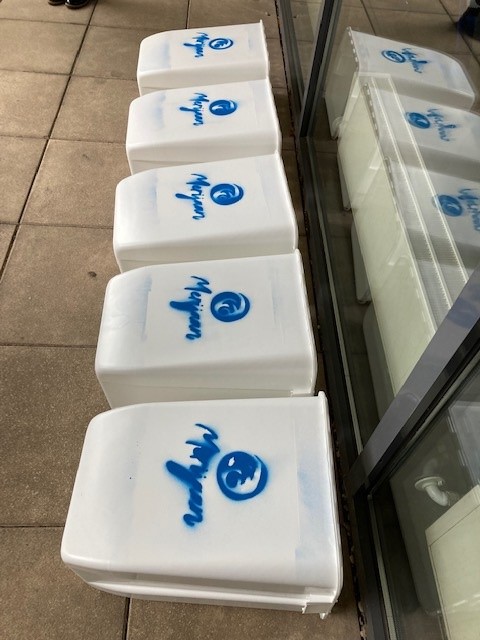
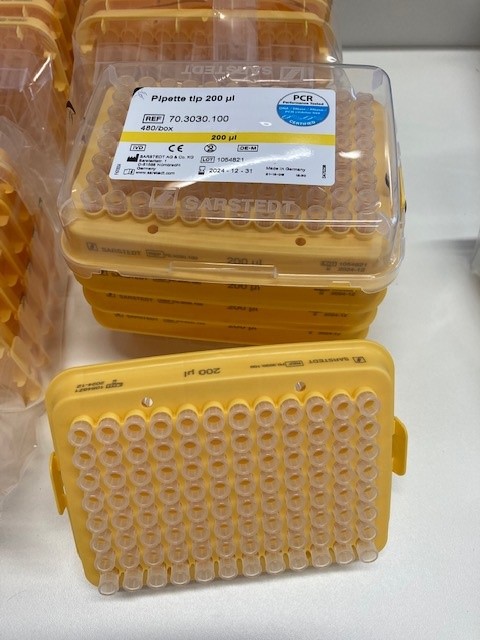
During the initial meeting, the mood was electric: ‘We immediately knew: this is a perfect fit! A really great fit!’ When the experts from Merijaan then rummaged through the laboratory’s bins from left to right to find the right plastic for their purposes, it became clear: the start-up was targeting the boxes used to package pipette tips. These boxes are ideal because they are made of sturdy plastic and come in a variety of colors.
During a workshop, the team explored how these plastic boxes could be optimally reused and what upcycling options were available. The result? Soap dishes, rulers, carabiners—and, above all, a fully recycled surfboard. ‘That’s exactly what…,’ says Katja Strunck, ‘what really interests young people today! The sustainability concept is a huge selling point. And that’s something we want to support.’
Two years ago, additional bins were placed in the laboratories—exclusively for collecting hard plastic pipette tip boxes. ‘And with great discipline,’ as Katja Strunck confirms, ‘because our employees love the project.’ Each month, 100 to 110 kilograms of this plastic alone are collected and transported in sacks across Berlin to Merijaan.

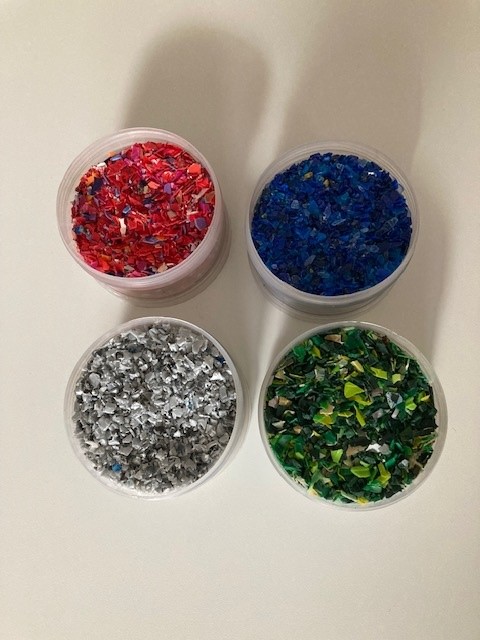

“This,” says Katja Strunck, “is now an integral part of our waste management system. And of course, this won’t be the only measure we take to promote sustainability.” In this spirit, Labor Berlin has recently switched to recycled waste bins—particularly for so-called Category C waste, which must be incinerated along with the bin itself. “We generate around 5,000 Category C waste containers annually,” estimates Katja Strunck, “and we’ve now switched to a recycled product with our waste management partner, ensuring the plastic is reused at least once.” Additionally, Labor Berlin already sends back cardboard boxes and polystyrene crates used to deliver laboratory materials to suppliers for reuse.
And now, in collaboration with Merijaan, we’re exploring the recycling of the countless bags in which blood and tissue samples arrive at the lab—all of which are currently disposed of. “It’s an unimaginable volume,” says Katja Strunck, “but soon, these could be turned into items like test tube racks—or even merchandise such as cutting boards.”
The interview with Katja Strunck and additional examples of sustainability projects in laboratories were published as part of the newsletter by the Accredited Laboratories in Medicine e.V. (ALM).
You may also be interested in
-

CD19 CAR T cell therapy for treatment-refractory seropositive rheumatoid arthritis: a phase 1 trial
Labor Berlin researchers, in collaboration with Charité clinicians, have demonstrated that autologous CD19 CAR-T cell therapy in severe, therapy-refractory ACPA-positive rheumatoid arthritis leads to ...Read the publication -

Autosomal recessive HOXA3 deficiency causes congenital athymia and laryngeal malformation
Labor Berlin researchers, in collaboration with clinicians from Charité and international partners, have identified a genetic defect in the HOXA3 gene as the cause ...Read the publication -
![]()
Diagnostic Testing for *Candidozyma auris* at Labor Berlin
Candidozyma auris (formerly Candida auris) is a multidrug-resistant yeast species and a major nosocomial pathogen. In addition to colonization, it can cause invasive infections, ...read more