
Sample Submission, Receipt & Preanalytics
Minimizing sources of error, optimizing processes
For Referring Physicians
Useful information about your sample submission
Direct links to additional information
Important Notes
Billing for Private Patients, Self-Payers & Laboratory Medical Value-Added Services
For Direct Sample Submissions Without a Physician’s Referral
For Self-Payers
Reservation of Rights

Central Sample Reception
Labor Berlin operates a highly automated laboratory infrastructure for sample processing. The Central Sample Reception (ZPA) is responsible for the receipt, forwarding, processing, archiving and disposal of samples. Approximately 35,000 samples are processed daily at Labor Berlin. The ZPA is supported operationally by the heads of the individual specialist departments.

Samples are transported to the ZPA via various routes:
Through pneumatic tube systems, box conveyor systems, and couriers. This involves high complexity due to the enormous variety: We currently process 40 different types of sample tubes.



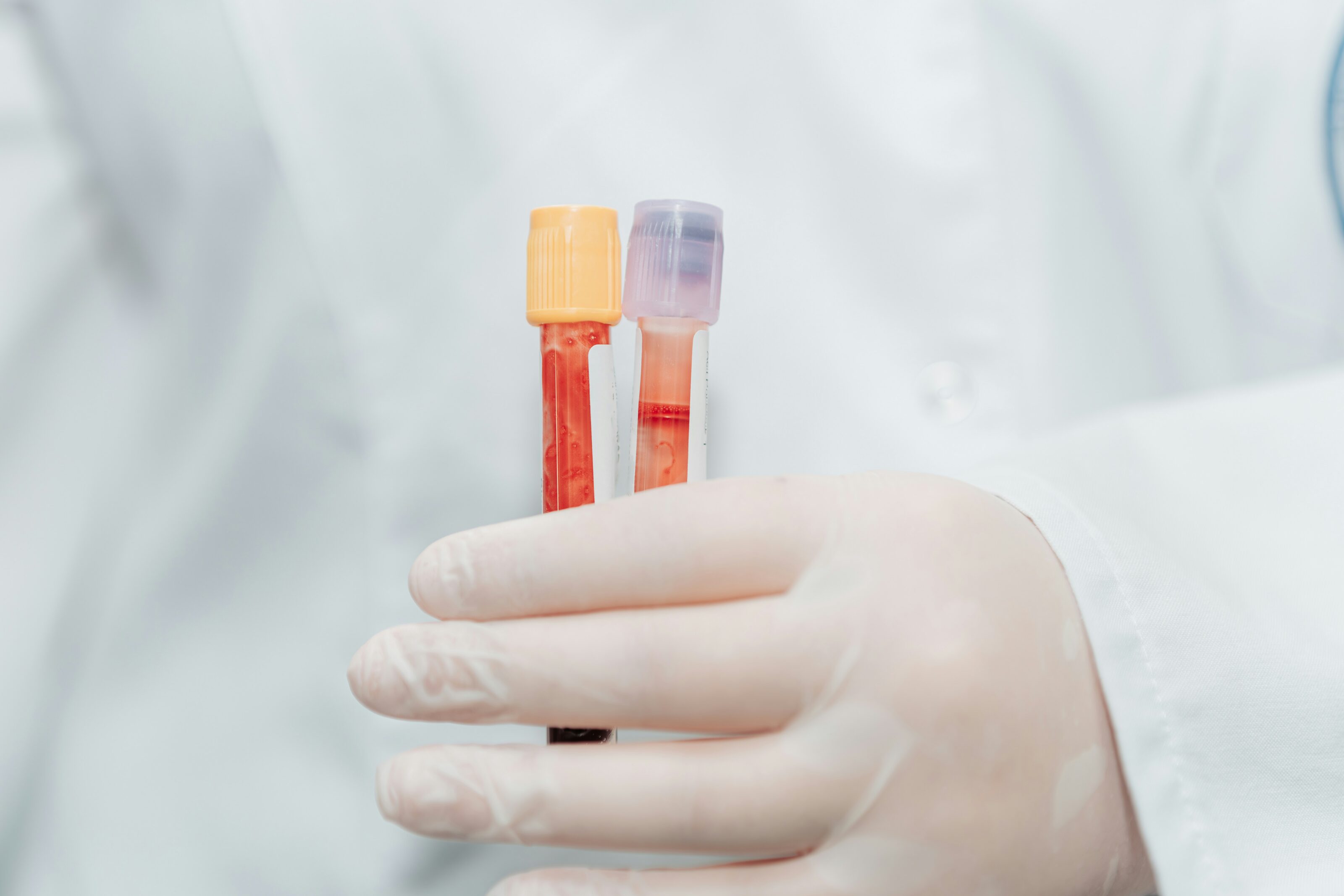
Pre-analytics
The examination process of a sample can be divided into four phases: pre-analytics, analytics, analytical evaluation, and medical evaluation.
While analytics today is at a very reliable level, the so-called pre-analytical phase remains one of the key sources of error in the generation and assessment of data.
Pre-analytics refers to the phase of a test request that occurs prior to the actual laboratory analysis. The reliability of laboratory findings depends to a large extent on this phase, as physical, chemical, and physiological influences can affect the sample and alter the parameter under investigation. This may result in the measured value no longer accurately reflecting the in vivo conditions within an acceptable range. It is therefore essential to keep the time between sample collection and analysis as short as possible. Furthermore, it is important to be aware of the factors that may influence the desired parameter. These can be divided into influencing factors and interfering factors.
What should be considered when collecting samples? Where should laboratory samples be sent? Which forms are required?
The following sections address these and other questions related to sample collection.
Should you require further information, please do not hesitate to contact us. The contact details for the individual specialist departments can be found under Specialist Departments.
Pre-analytical Instructions
Preanalytics – General Information
-
In principle, requesting laboratory analyses constitutes a medical prescription and must therefore be documented in writing or electronically. The requesting physician is responsible for ensuring that the examination is necessary and beneficial for the patient.
For data protection reasons, only the minimum personal data required for the relevant purpose will be collected. The test request form, whether electronic or paper-based, must include all necessary master data. Patient master data for identification must include at least the following details: surname, first name, gender, and date of birth.
In addition to patient-specific data, the following sender details must be provided:
- clinic,
- ward or department,
- date and time of sample collection.
- In individual cases, it may be necessary to provide the laboratory with clinical information. Free-text fields are available for entering diagnoses, clinical questions, or indications.
Examples of other important details include:
- Blood gas analysis: body temperature;
- Hormone analysis: cycle day, week of pregnancy;
- Blood group serology: immunoprophylaxis, pregnancies, medications;
- Therapeutic drug monitoring: height, weight, dose, time of last dose;
- Toxicology: patient’s condition, clinical findings, initiated therapy including administered medications, suspected substance based on findings or clinical symptoms;
- Stimulation function tests: time before and after administration.
To ensure correct reading of the electronically readable request form, we kindly ask you to:
- enter handwritten information only in the designated fields;
- avoid folding or bending the request form;
- carefully attach barcode labels to the designated fields;
- request forms for our specialist departments are available under Forms / Download.
Our staff will be happy to assist you in a consultative discussion. Referral forms must additionally be stamped and signed by the panel physician. The EBM guidelines also apply. For private patients and self-pay examinations (IGeL), the complete postal address must be provided for billing purposes.
-
When creating the order, the urgency (emergency or routine request) must be specified simultaneously.
It is essential to ensure that emergency and routine requests are submitted as separate orders. Mixing the two urgency levels can lead to significant delays in emergency analyses and must therefore be avoided.
-
For molecular diagnostic or chromosomal testing, the test request form must be accompanied by the patient’s informed consent or that of their legal representative. Corresponding templates are available for download on our website under Service / Forms.
-
Intranet Charité: Medical Service / Laboratory / Information page on parameters and reference values / External Referrals
Intranet Vivantes: Materials / Organizational Manual / Regulations / Medicine / Labor Berlin or Forms / Medicine / Labor Berlin
The decision on the request is made by the site manager of the Central Laboratory / Head of Diagnostics / On-duty staff member.
-
Parameters not offered or performed by Labor Berlin are routinely sent to an external laboratory.
The dispatch of your sample material is documented in the laboratory with date, time, and processor for traceability.
For any questions regarding dispatch, please do not hesitate to contact us.
Analyses performed by subcontractors are clearly marked in the service catalog and on the report.
-
Subcontractors are selected based on defined quality criteria and regularly evaluated for their services. The criteria include:
- evidence of quality;
- proof of successful participation in external quality assessment schemes (EQAS) for the intended analysis in the past year;
- copy of the subcontractor’s certificate or accreditation document;
- location of the external laboratory;
- rapid accessibility;
- cost-effective transport;
- price-to-performance ratio for the intended analysis;
- rapid availability of results (processing time, hotline available);
- willingness to advise clinicians (interpretation of findings).
The laboratories with which cooperation agreements have been concluded and the procedures outsourced to them are listed. Subcontractors are contractually obligated to maintain confidentiality and comply with data protection regulations.
The current list of subcontractors can be requested from the laboratory upon request.
-
In cases of incomplete order placement, our staff will contact you by telephone. If clarification is not possible within a shift, you will receive a written notification informing you of missing information regarding your submission.
Please pay attention to this information, as we will only retain your sample for a limited time (sample-dependent) as “unresolved.”
The laboratory reserves the right to reject samples where the patient’s identity cannot be clearly established.
If a sample cannot be clearly assigned to a patient but cannot be retrieved or was collected in a critical patient condition, the laboratory will decide, after consultation with the requester, whether the requested tests can still be performed. The outcome of this consultation will be documented in the report.
Other reasons for rejection may include:
- Sample-related: sample too old, hemolyzed, clotted, incorrect or insufficient material, incorrect mixing ratio in citrate blood;
- Transport-related: incorrect transport conditions, sample unsuitable for transport, broken tubes;
- Analysis-related (tests requested outside the service catalog, exceeding the deadline for subsequent reporting for certain analytes);
- HIV diagnostics: Retesting for HIV from material submitted for other analyses will not be accepted. New sample material must be submitted in all cases;
- Missing informed consent for genetic testing requirements.
-
Sample storage and stability are complex areas significantly influenced by external factors (e.g., temperature, reagents, sample containers, stabilizers, light) or short half-lives of analytes (e.g., increase in homocysteine or decrease in glucose values).
Such alterations can be substantial and lead to misdiagnoses.
Therefore, the following guidelines apply:
- Send samples to the laboratory as quickly as possible and observe transport times;
- Store samples in a dark place at room temperature until transport, avoiding significant temperature fluctuations;
- Transport samples in an upright position;
- Observe preanalytical guidelines, e.g., send homocysteine samples immediately refrigerated, as they must be centrifuged promptly;
- Transport blood culture bottles safely using shipping sleeves to prevent breakage.
A contracted transport service ensures the professional transport of samples to the respective laboratories in accordance with the agreement.
The duration of sample transport is documented and evaluated at regular intervals.
All samples are classified as “Biological Substances Category B” and are considered potentially infectious. This necessitates compliance with applicable regulations (e.g., packaging instructions P650) for packaging and labeling:
- The primary container (sample tube);
- A secure and practical secondary packaging (e.g., shipping sleeve or tear-resistant foil bag) with absorbent material;
- A sturdy outer packaging (e.g., plastic box, transport box, or mailing envelope);
- Samples can also be sent by mail. Additional conditions of Deutsche Post AG apply.
The following are not permitted for mailing:
- Infectious substances of any kind in Category A (e.g., Lassa);
- Patient samples and microbiological cultures in Category B;
- Risk group 3 pathogens (e.g., HIV, hepatitis, tuberculosis).
-
If samples must be transported frozen, it is advisable to pre-freeze the transport containers. Place the shipping containers in a freezer (approx. -20°C) to pre-chill them. To avoid quality loss, the sample must be completely frozen before dispatch. Immediately before transport, place the frozen sample into the pre-chilled transport container.
For transport, place the transport container into a styrofoam box to protect it from temperature loss.
-
Transport-related preanalytical effects on test results can be minimized under certain conditions. For gentle transport via pneumatic tube systems, sample tubes must be secured in the cartridge with a foam stopper.
If samples are sent without padding, this can lead to clinically relevant distortions of results. Particularly affected analytes include potassium, phosphate, NSE, LDH, and blood counts (platelets).
The following samples are generally excluded from transport via pneumatic tube systems:
- Cerebrospinal fluid (CSF);
- Citrated plasma for specialized coagulation testing;
- Platelet function tests;
- Blood cultures;
- Neurosurgical biopsies;
- Samples for cytological examinations (e.g., bronchial lavage);
- Non-liquid-tight sample containers.


General Laboratory Information
Labor Berlin – Charité Vivantes GmbH
Sylter Straße 2 | 13353 BerlinPhone: +49 (30) 405 026-800
For external senders
Phone: +49 (30) 405 026-500Fax: +49 (30) 405 026-600
Email: info@laborberlin.com
My Labor Berlin for Private Individuals
Labor Berlin – Charité Vivantes Services GmbH
Sylter Straße 2 | 13353 BerlinEmail: meinlabor@laborberlin.com
Phone: +49 (30) 40 50 26 541